
What started with brook trout, frozen steaks, and nowhere to prepare food in the backcountry became a six-year journey from the first carbon fiber prototype to a complete modular system. Here's how Campstand came to life.
Where It All Started — 2020
Back in 2020, I was backpacking just about every weekend throughout the summer.
A friend and I would get off work Friday, drive four hours into the mountains, hike into our spot around midnight, and set up camp. We'd spend the weekend fishing, cooking, and enjoying the mountains before packing up Sunday evening and heading home.
After enough weekends like that, my priorities started to change.
I'd gotten pretty burnt out on freeze-dried meals. I started realizing that bringing actual food into the backcountry didn't necessarily add a ridiculous amount of weight. At least, that's what I kept telling myself.
I started packing frozen steaks, which would be thawed by the time we reached camp. The area we frequented was also loaded with brook trout, so fresh fish was often on the menu.
But there was a problem.
I was tired of cleaning fish on rocks or trying to hold them while I worked. Cutting up steaks wasn't much better. There was never a good, clean, stable place to prepare food.
The more time I spent backpacking, the more I realized I was willing to carry a little extra weight for things that genuinely improved the experience.
I didn't want to haul a conventional camp table into the mountains. I just wanted something small, lightweight, and practical that gave me a proper workspace wherever I ended up camping.
That's where the idea for Campstand began.
The First Prototype
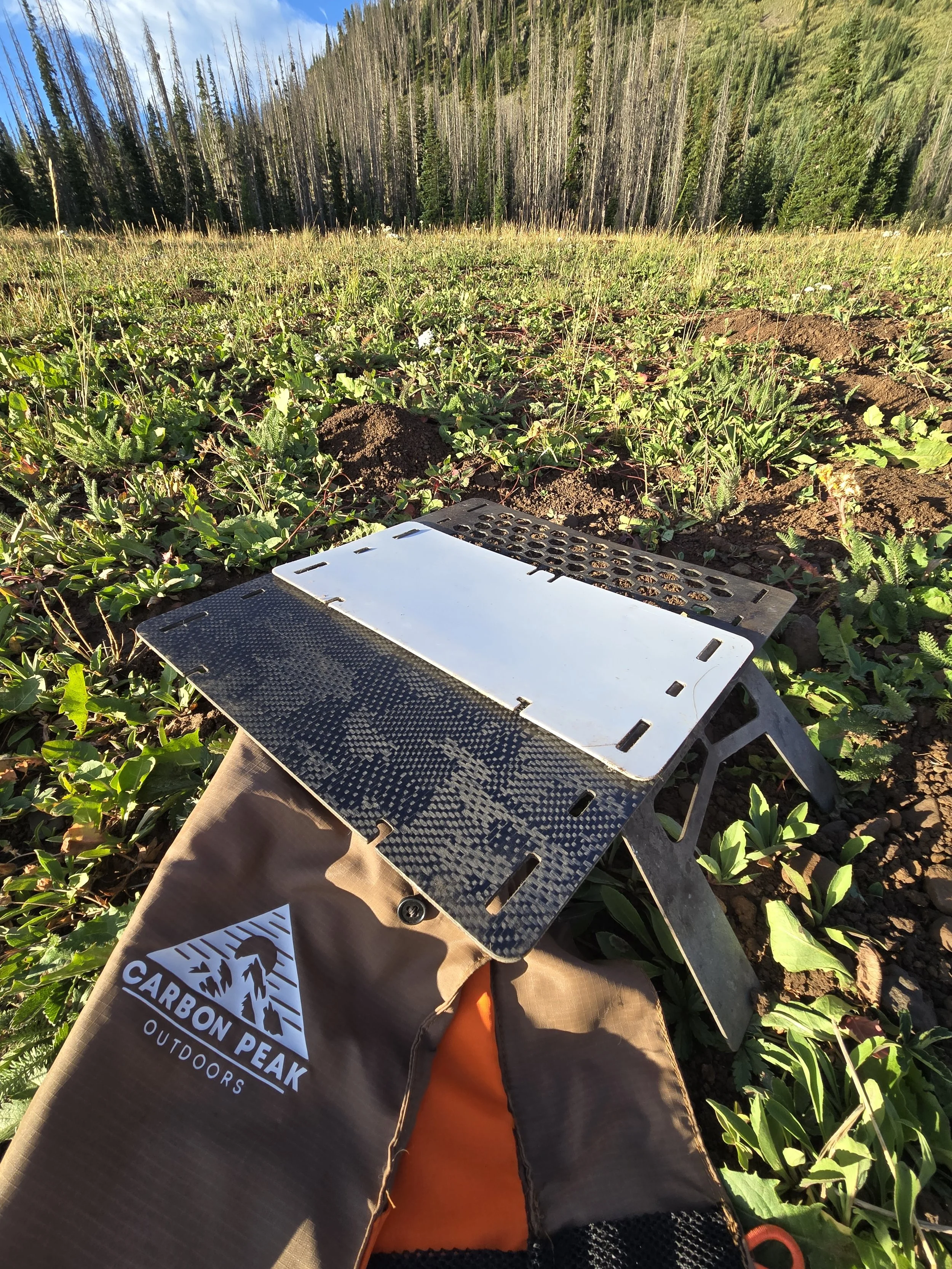
In 2020, I built the first carbon fiber Campstand table and a lightweight cutting board.
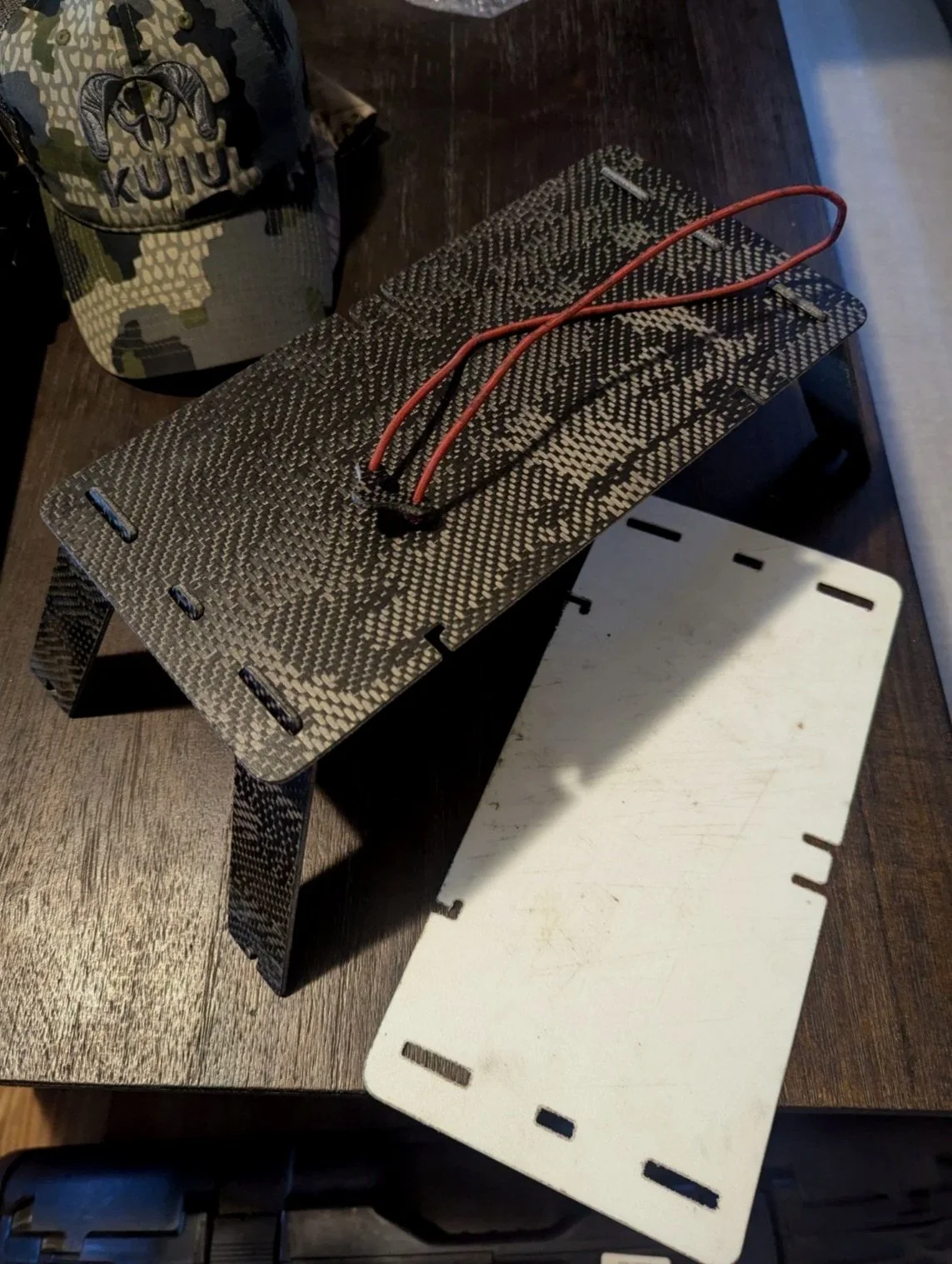
And they're both still the ones I'm using today.
The original design worked so well that I never really felt the need to replace it. Over the years, that same table and cutting board have continued going on trips with me, doing exactly what I built them to do.
In fact, the table and cutting board you see on the current Campstand product page are those original 2020 prototypes.
That might be my favorite part of the whole story.
Six years later, I'm not trying to reinvent the basic concept. I'm trying to make it lighter, refine the system around it, and figure out how to manufacture it efficiently enough to offer it to other people.
The original table proved the idea worked. Bringing it into production turned out to be a different challenge.
A Design That Worked, but a Process That Didn't Scale
The original carbon table was made using vacuum infusion, a composite manufacturing process I was already familiar with.
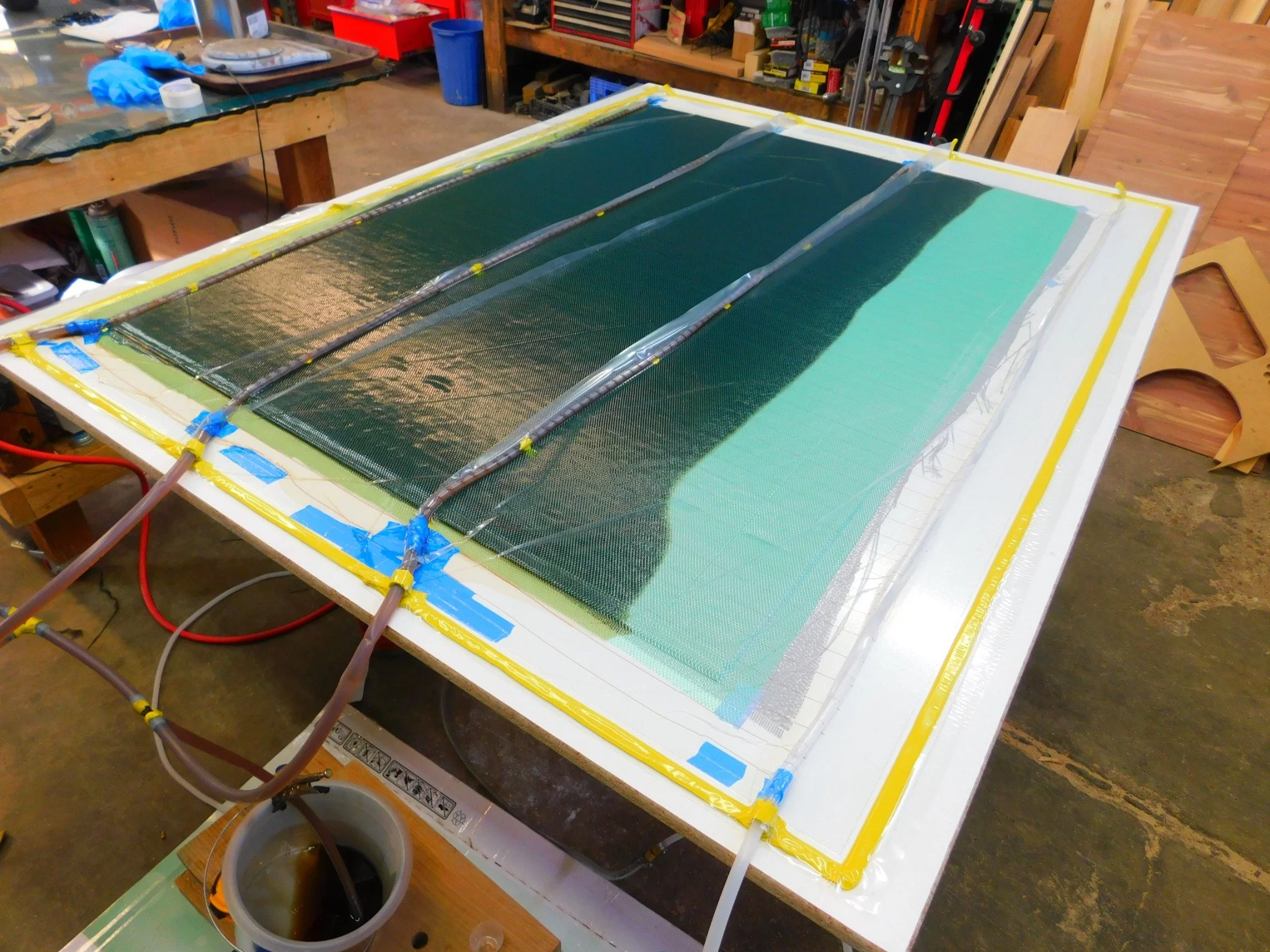
It produced a great finished part, but it also created a lot of secondary work.
Trimming and finishing the carbon components was time-consuming. Building a handful of tables was manageable, but producing them consistently at the volume I envisioned would have been another story.
At the time, I couldn't see a realistic way to keep up with that workload by myself.
I didn't want to launch a product I couldn't reliably manufacture, so Campstand development went on the back burner.
I never stopped using the original table, though. It continued coming along on trips, and the idea of eventually bringing it to market never really went away.
The Missing Piece
There was another part of the original concept that I hadn't built yet: the cooking grill.
Cooking over a fire had always been a big part of my backcountry trips. For years, I carried a grill made by another company to fill that gap in my setup.
It worked, but it was heavy.
I'd always envisioned incorporating a grill into Campstand so the table, cutting surface, and fire-cooking setup could work together as one compact system.
That idea stuck around for years, but I didn't actually build the first Campstand stainless steel grill until 2025.
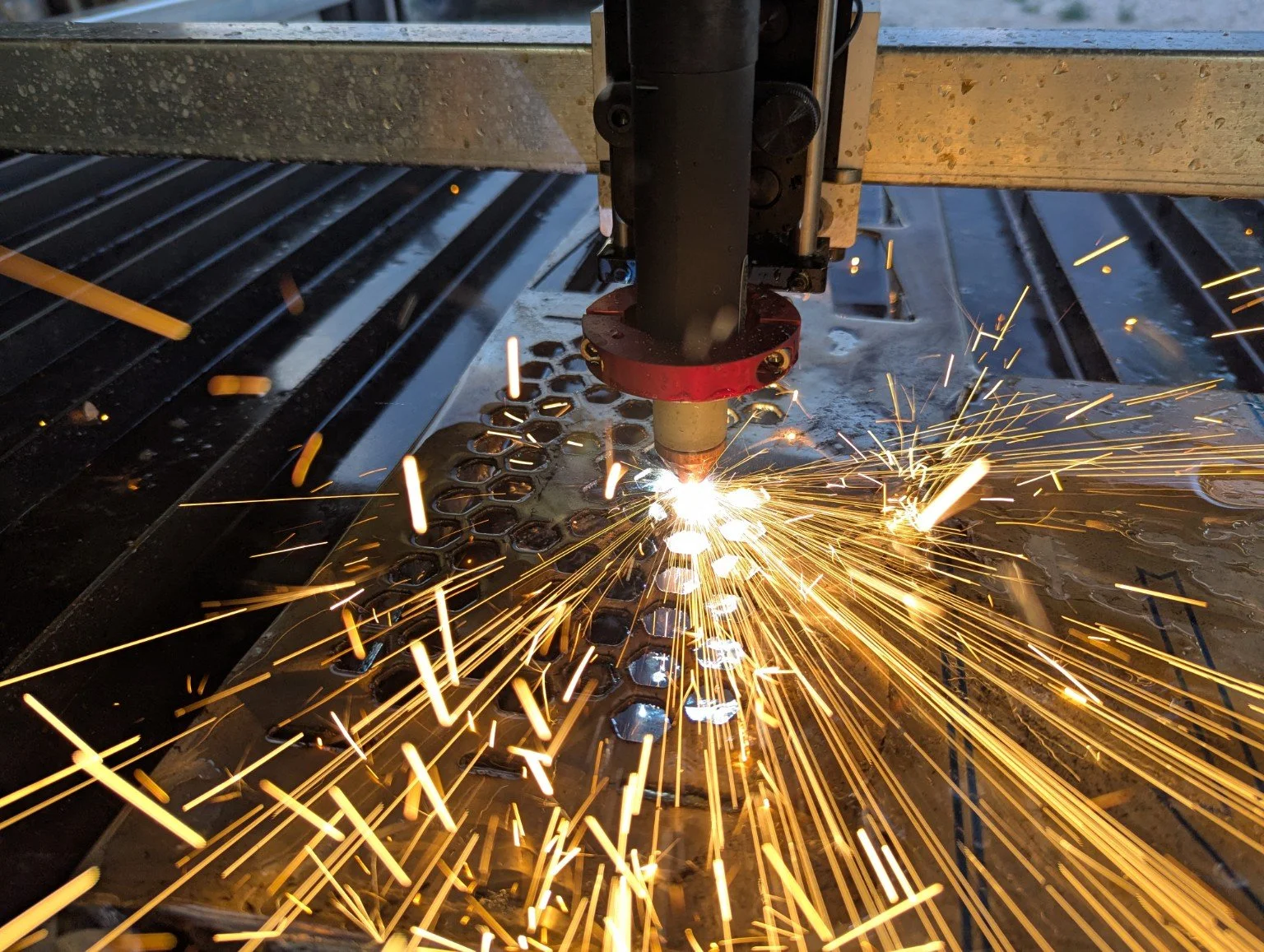
It was a big step toward completing the system I'd had in mind from the beginning.
The grill is still undergoing refinement, particularly when it comes to weight and performance, but the missing piece of the original concept is finally taking shape.
Building the Foundation — 2025
Even while Campstand was on the back burner, I never really stopped thinking about it.
Over the following years, I gained more manufacturing experience through my full-time engineering job, particularly working in a higher-volume production environment.
That experience changed how I looked at the challenges that had originally stopped me.
I started thinking less about how to make a few good parts and more about how to manufacture those parts consistently, efficiently, and repeatedly.
There was also something else pushing me.
I kept having that nagging thought on my drive to work: Why am I doing this every day when I could be spending that time in my own shop, making things I'm genuinely proud of?
In 2025, I decided to give Carbon Peak Outdoors another serious shot.
Rather than immediately jumping back into Campstand, which was easily my most involved product, I started with a few smaller bowhunting accessories.
I wanted to get actual products out into the world, establish the business, and learn what it would take to sell and support them.
My thinking was that once the foundation was in place, returning to Campstand wouldn't feel quite so overwhelming.
I'm still working that same full-time engineering job today. It's demanding, both mentally and physically, and finding the time and energy to build Carbon Peak Outdoors around it isn't always easy.
That's part of why I decided to start with smaller products. I wanted to establish the business, gain experience bringing products to market, and build a foundation before tackling something as involved as Campstand.
The long-term goal is to spend my days designing and manufacturing products in my own shop. I'm not there yet, but Carbon Peak Outdoors is how I'm working toward it.
Back to the Workbench — 2026
In 2026, I finally returned to Campstand development.
My original plan was to continue using vacuum infusion. It was a process I knew well, and the original table had already proven that it could produce a durable, functional product.
But the trimming and finishing problem hadn't gone away.
This time, I considered outsourcing the trimming to a waterjet cutting service.
That would have eliminated a significant amount of work in my own shop, but it introduced a different set of concerns.
I'd be relying on someone else's schedule, trusting another shop to maintain the quality I wanted, and adding another step between manufacturing a part and having a finished product.
I've always preferred doing things myself. Part of the satisfaction of building something is knowing exactly how it was made and being able to take responsibility for every detail.
Outsourcing such an important part of the process didn't sit particularly well with me.
So I started looking at other ways to manufacture the carbon components.
That eventually led me toward prepreg carbon fiber and heated compression molding.
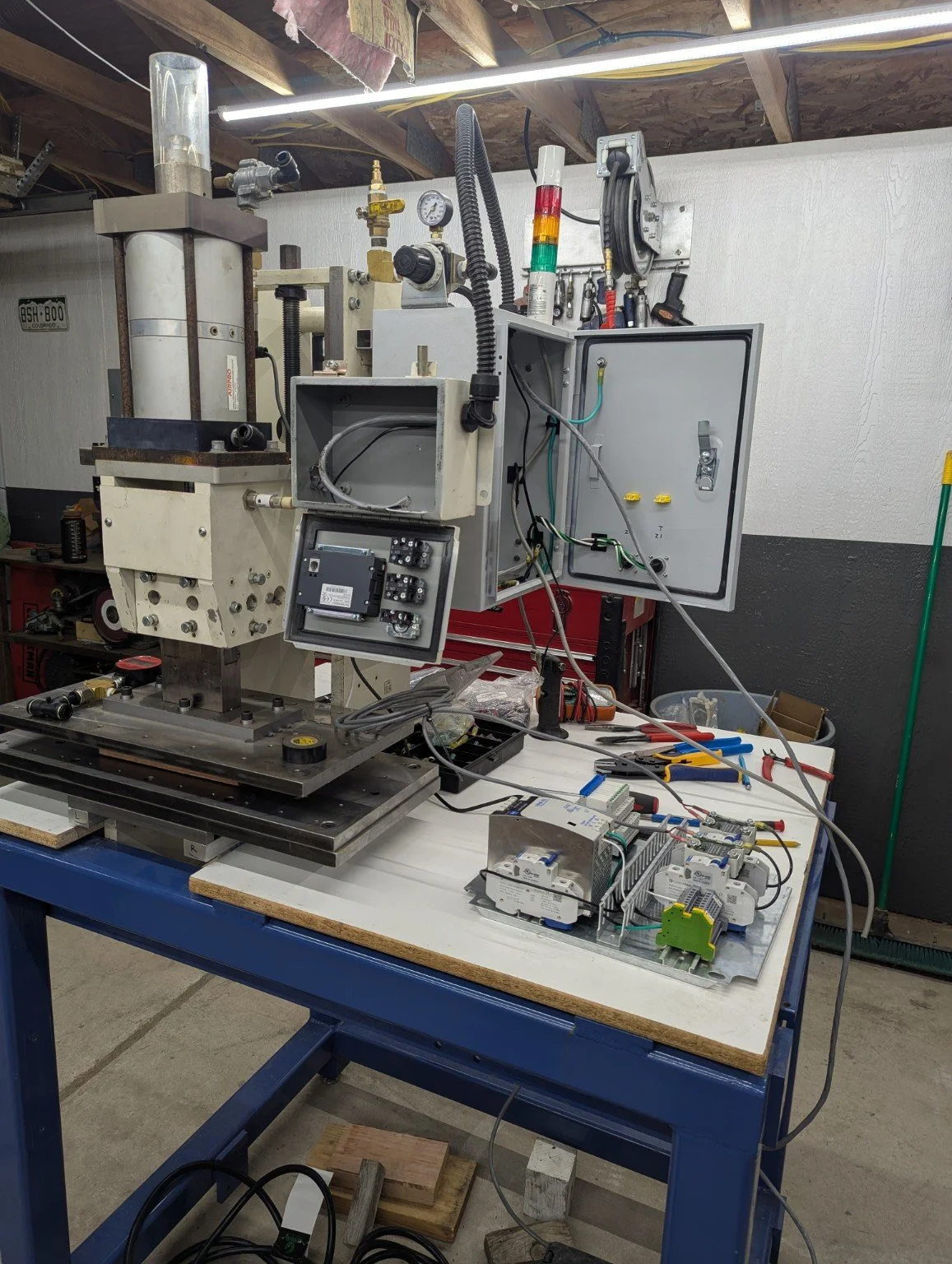
Instead of infusing oversized panels and spending significant time trimming and finishing them afterward, the goal is to mold parts much closer to their finished dimensions, reducing secondary work and making the process more repeatable.
I'm also exploring lighter core materials to reduce weight without sacrificing the strength and rigidity that made the original table so useful.
It's a different manufacturing process, and there's still plenty to prove through testing.
But for the first time, I can see a potential path toward making Campstand efficiently in my own shop.
Where Campstand Stands Today
Campstand has come a long way from those weekends spent cleaning brook trout on rocks and cutting steaks wherever I could find a reasonably flat surface.
The original table and cutting board are still going strong after six years. The stainless grill I always wanted to incorporate is finally part of the system.
Now the focus is on refining everything for production.
That means reducing weight, improving the stainless components, developing a better storage system, testing new composite materials, and building the tooling needed to manufacture the carbon components consistently.
Some of those changes are straightforward. Others are going to take experimentation, testing, and probably a few failed attempts along the way.
That's part of the process.
The goal isn't just to make the lightest table possible. It's to make something useful enough that it's worth carrying into the backcountry.
After all, Campstand was born because I realized that sometimes a little extra weight is worth it when it makes the experience that much better.
Six years later, I still believe that.
And this time, I'm working toward getting Campstand out of my shop and into other people's packs.
Want to follow along? Visit the Campstand development page to see the current system, follow the progress toward production, and join the launch list for development updates and early-bird pricing.